Chorchori Cooking Method for Mixed Vegetables
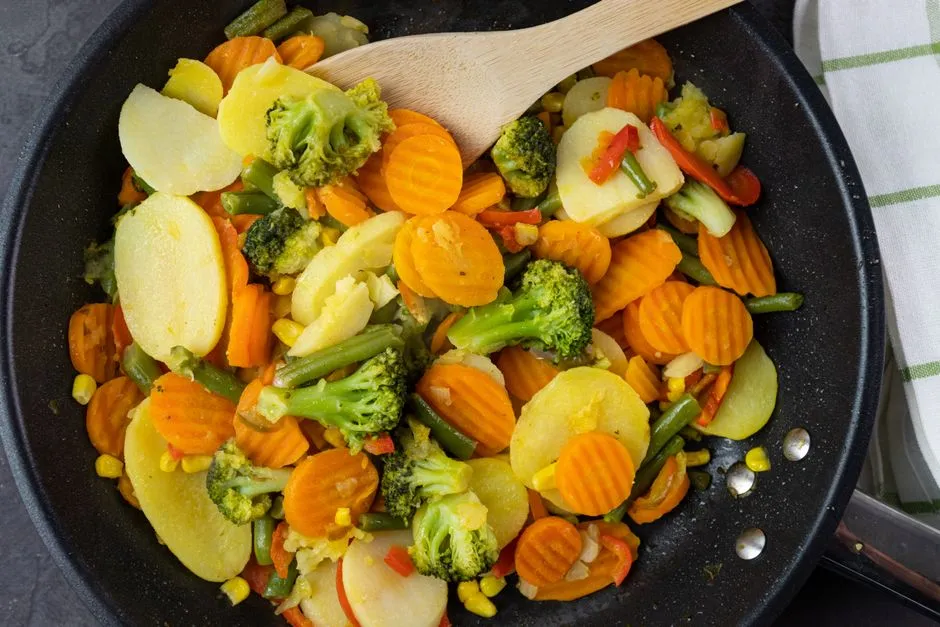
Choose vegetables that can share one pan
Chorchori is made in many household and regional forms, so begin with a tested recipe rather than a universal ingredient list. The practical method combines vegetables in a way that lets their flavors and textures meet without turning every piece into the same soft shape.
Use the vegetable cutting guide to match thickness to density. Keep pieces consistent within each ingredient and prepare the full sequence before heating.
Build the first aroma carefully
Measure the recipe's fat, whole spices, ground spices, and aromatics. If using a five-spice blend, read the panch phoron guide and check which seeds are actually present.
Heat the pan according to the method, add whole spices carefully, and have the next ingredient ready. Stop before seeds scorch. Hot fat can burn and ignite, so maintain responsible supervision, keep water and children away, and never put water on an oil fire.
Add vegetables by cooking need
Begin with the vegetables the recipe identifies as slowest or those that need early contact with the pan. Add quicker-cooking or more watery ingredients later. Stir enough to coat and distribute, but avoid breaking tender pieces before they have cooked.
Salt and other seasonings affect water release, so follow the recipe's timing. A pan that looks dry may soon receive liquid from the vegetables. Pause before adding unmeasured water.
Use trapped moisture deliberately
Many one-pan vegetable methods rely on some combination of released moisture, covered cooking, and controlled reduction. Use the lid only as directed. When opening, keep face and hands away from escaping steam.
If the pan threatens to catch before the vegetables release enough moisture, use the recipe's stated correction and adjust heat safely. Do not pour water into hot fat without controlling splashing and steam. A broad pan can help moisture evaporate; a crowded deep pan may stay wetter.
Finish toward the intended texture
Some versions are relatively dry, while others retain more soft vegetables and coating. Follow the selected recipe. Uncover at the stated stage and stir gently enough to bring the mixture together. Scrape only with utensils safe for the cookware.
If the dish contains potato and poppy seed paste, the aloo posto texture guide addresses a related but distinct preparation. Do not assume every mixed vegetable dish needs a paste finish.
Taste only when ingredients are safely cooked. Balance salt, bitterness, heat, sweetness, and acidity according to the recipe. Do not add every corrective flavor at once; one careful adjustment is easier to understand.
Diagnose water and softness
If the result is watery, review vegetable choice, crowding, lid time, salt timing, and final reduction. If everything collapsed, check cut size, entry order, stirring, and total cooking. If firm pieces remain, that ingredient may need a smaller cut or earlier start next time.
Avoid prolonged cooking to soften one firm potato after the other vegetables are ready. Continue or remove ingredients only through a safe, recipe-appropriate method.
Record the pan, not just the ingredients
Write down vegetable amounts, cuts, entry order, lid use, and final texture. The pan shape and batch size matter. A repeatable chorchori comes from compatible vegetables, thoughtful cuts, staged additions, controlled moisture, and a finish chosen on purpose.
Use named safety sources
For food handling, use FoodSafety.gov's four steps. For hot-oil work, follow the U.S. Fire Administration's cooking-fire guidance. Outside the United States, use equivalent local government authorities. If cooking, storage, contamination, or temperature history is uncertain, discard the food.