Bengali-Style Tomato Chutney With Balanced Texture
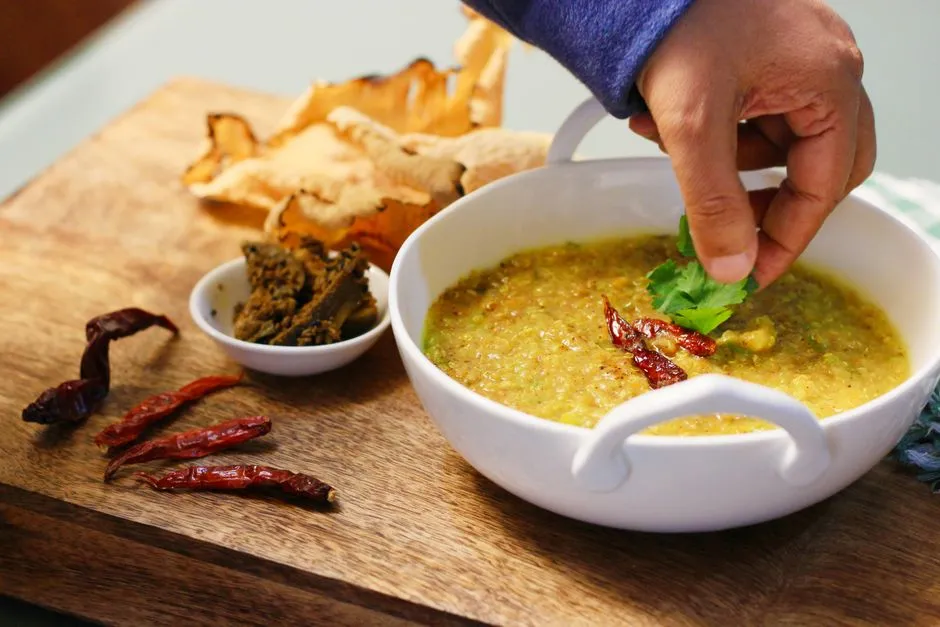
Choose the chutney's final character
Bengali-style tomato chutney can vary in sweetness, spice, fruit additions, and thickness. Start with a tested recipe and decide whether you want soft tomato pieces in syrup, a smoother spoonable chutney, or another described finish. Household versions differ, so treat the recipe title as a description of that version rather than a universal definition.
Select sound tomatoes and other fruit. Check dried fruit, spices, nuts, coconut, and packaged ingredients for allergens and condition. Wash produce and prepare it under FoodSafety.gov's four-step food-safety guidance.
Cut tomatoes for the intended texture
Use the recipe's peeling, seeding, and cutting method. Similar pieces soften on a similar schedule. Larger chunks may retain more identity, while small pieces break down more readily.
Work with a sharp suitable knife on a stable board. Keep hands clear and separate any raw animal-food preparation from produce and finished chutney. If adding dates or other dried fruit, remove pits carefully and verify none remain; tell diners about any ingredient that may create a choking concern.
Temper spices without scorching
Measure the fat, whole spices, dried chile, tomatoes, sweetener, liquid, and additions before heating. Use the recipe's sequence. Add whole spices carefully and proceed when their aroma and color reach the method's cue.
Hot fat can cause burns and fire. Maintain responsible supervision, keep children and water away, and never put water on an oil fire. If spices burn, discard the base safely and restart after the pan cools.
The Bengali pantry starter guide explains how to keep tempering blends labeled and avoid using the wrong blend.
Add sweetness in measured stages
Cook tomatoes until the recipe's softening cue, then add sugar, jaggery, dates, raisins, or other sweet ingredients only as specified. Sweeteners behave differently and are not always interchangeable by volume or effect.
Stir with a suitable utensil and control splashing. Hot sugar mixtures can stick to skin and cause severe burns. Keep the pan stable, avoid leaning over it, and do not taste directly from a boiling spoon.
If the chutney will include fresh coconut, use only a tested version and follow FoodSafety.gov's four-step food-safety guidance. Coconut is not a universal addition.
Stop at the texture that accounts for cooling
The chutney may thicken as it cools, so follow the recipe's hot-stage cue. If reduced too far, it can become sticky or candy-like. If it remains too loose after ingredients are safely cooked, continue only as the method permits and reassess frequently.
Taste a cooled safe sample for sweetness, acidity, salt, bitterness, and spice. Correct gradually. More sugar can conceal acidity but may also flatten the tomato; more acid can brighten the flavor but may make a thin chutney feel sharper.
Serve and store accurately
Use a clean serving utensil and provide ingredient information. A chutney may accompany dishes such as luchi in some menus, but serving order and combinations differ between households.
Follow FoodSafety.gov's four-step food-safety guidance and the tested recipe for cooling, refrigeration, storage, and leftovers. Do not treat a homemade sweet chutney as automatically shelf-stable or attempt room-temperature canning without a tested process such as one published by the National Center for Home Food Preservation.
Record tomato type, cut, sweetener, additions, pan, and final hot texture. Balanced chutney comes from measured sweetness, controlled reduction, careful tasting, and stopping at the recipe's intended consistency.
Use named safety sources
For food handling, use FoodSafety.gov's four steps. For hot-oil work, follow the U.S. Fire Administration's cooking-fire guidance. Outside the United States, use equivalent local government authorities. If cooking, storage, contamination, or temperature history is uncertain, discard the food.